News +
Participation in the 3rd Interdisciplinary Seminar on Communication Theory at the University of Zaragoza

Participation in the 3rd Interdisciplinary Seminar on Communication Theory at the University of Zaragoza

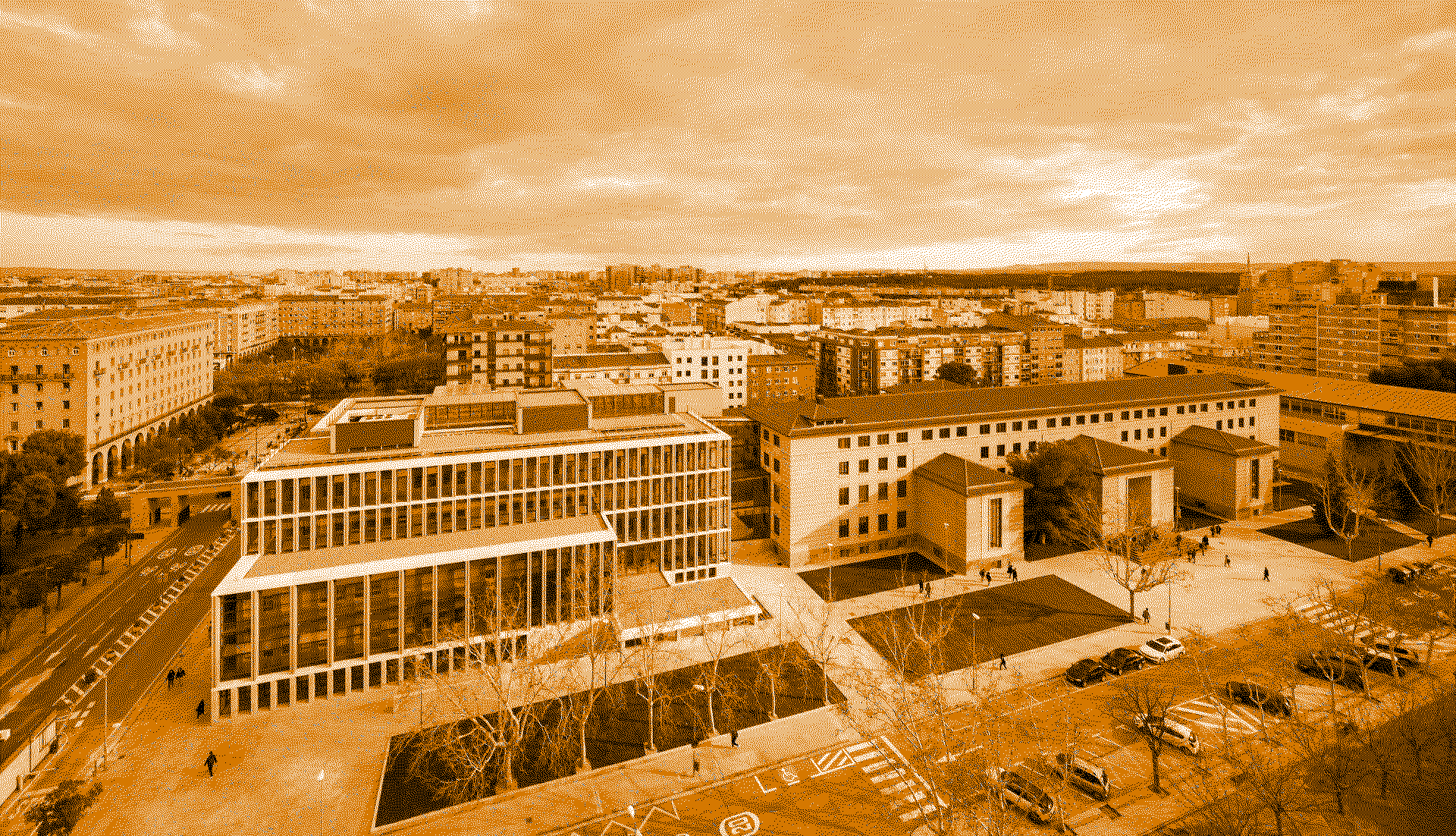
On September 10 and 11, 2026, the Faculty of Philosophy and Letters of the University of Zaragoza will host the 3rd Interdisciplinary Seminar on Communication Theory, organised by the MediaFlows research group at the University of Valencia. This year's edition is dedicated to “Authoritarianism and the Post-Media Public Sphere.”

Ezequiel Soriano and Emiliano Treré will present the paper “Limits, Solutions and Computational Futures: Data Centres and the Socio-Ecological Crisis,” focusing on the impact of digital infrastructures on the contemporary socio-ecological crisis.

The presentation will take place on Friday, September 11, at 11:30 am, as part of Panel 4: Corporate Communication, Data and Platforms, moderated by María Teresa Mercado Sáez (University of Valencia). The panel will also feature other presentations focusing on data, platforms, and corporate communication.

Press Release: The DataECO Project Addresses the Real Impact of Digital Infrastructures on the Climate Emergency

Press Release: The DataECO Project Addresses the Real Impact of Digital Infrastructures on the Climate Emergency

Data centres are not merely technical infrastructures, but spaces where broader social, political, and ecological tensions become visible. Conflicts surrounding these infrastructures are linked to extractivism, energy consumption, and the climate crisis, highlighting the material limits of the digital world. It is within this context that the project “Data Ecologies: Exploring Forms of Environmental Activism Through and Against Data in the Platform Society” (DataECO) (ATR2024-154984) operates. At the University of Santiago de Compostela (USC), the project is being developed by researchers Emiliano Treré and Ezequiel Soriano and is funded by the Spanish Ministry of Science, Innovation and Universities and the State Research Agency (MICIU/AEI/10.13039/501100011033), as part of the ATRAE programme.

Far from being abstract, the researchers explain, “data depend on resource-intensive infrastructures whose expansion raises urgent questions about sustainability, territory, and governance.” In this context, DataECO focuses on an emerging phenomenon: the debate around supposed “solutions” to the ecological impact of digitalisation. Rather than adopting purely technical or diagnostic approaches, the project critically examines the alternatives proposed by different actors, from corporate strategies based on energy efficiency and so-called “green” algorithms, to technological proposals such as DNA data storage, as well as more radical approaches such as the deliberate reduction of technological use (decomputing) and perspectives on environmental and data justice promoted by social movements. “Far from being neutral, these solutions can function as strategies for adapting to, legitimising, or displacing the problem, becoming a site of contestation over the limits and future of digitalisation,” Treré and Soriano argue.

Using a comparative approach focused on Spain, Italy, Ireland, and Chile, DataECO combines digital ethnography, interviews, and content analysis to develop an innovative interdisciplinary framework for understanding environmental activism in the context of the current data centre boom. Its aim is to generate knowledge that is useful not only to the academic community, but also to activists, policymakers, and citizens interested in understanding the real impact of digital infrastructures on the climate emergency.

Link to the original press release (Galician): https://www.usc.gal/gl/xornal/novas/proxecto-dataeco-aborda-impacto-real-infraestruturas-dixitais-emerxencia-climatica
Participation in the Data Justice Conference 2026

Participation in the Data Justice Conference 2026

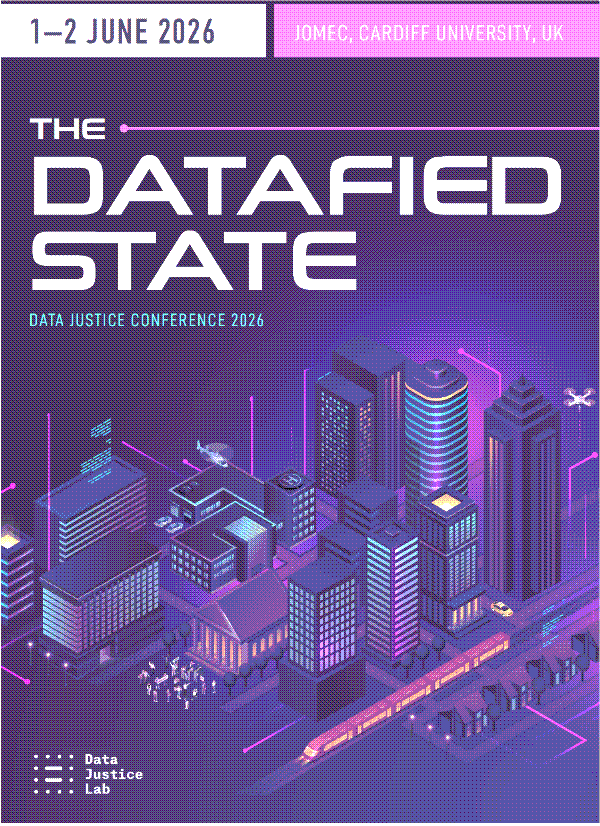
From June 1 to 2, 2026, Cardiff University (UK) will host the fourth international edition of the Data Justice Conference, titled “The Datafied State” and organised by the Data Justice Lab.

Emiliano Treré, one of the conference organisers, will present the paper “The Contested Limits of Datafication: Environmental Crisis, Colonial Tales and Sociotechnical Solutions” together with Ezequiel Soriano.

The full programme is available at: https://datajusticelab.org/wp-content/uploads/2026/05/DJConference_Programme_2026_DIGI.pdf

Participation in the 10th International Congress of AE-IC in Pontevedra

Participation in the 10th International Congress of AE-IC in Pontevedra

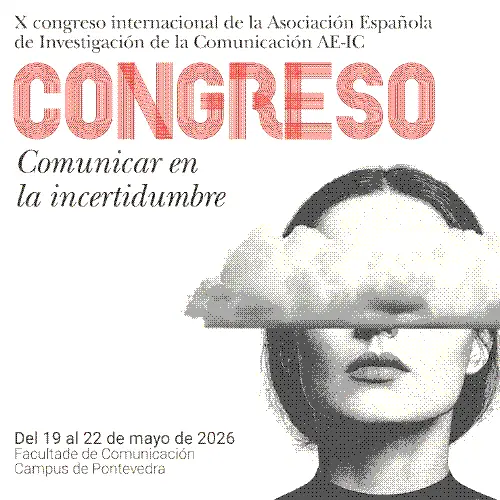
The DataECO project and the ADS Research Team — Algorithmic Cultures, Data Ecologies and Synthetic Media — are taking part this week in the 10th International Congress of the Spanish Association for Communication Research (AE-IC), taking place from May 19 to 22, 2026, at the Faculty of Communication of the University of Vigo (CREA Campus, Pontevedra), under the theme “Communicating in Uncertainty”.

To close the congress, Emiliano Treré will participate in the closing plenary with the presentation “Between Algorithms and Power: Aesthetics, Resistances and Ecologies of the Digital Future.”

Full programme: https://aeicpontevedra2026.org/openconf/modules/request.php?module=oc_program&action=program.php&p=program

Creation of the ADS Research Team (Algorithmic Cultures, Data Ecologies and Synthetic Media)

Creation of the ADS Research Team (Algorithmic Cultures, Data Ecologies and Synthetic Media)

On April 13, 2026, the ADS Research Team — Algorithmic Cultures, Data Ecologies and Synthetic Media — was formally established within the Novos Medios research group.

The team brings together a research trajectory focused on the study of algorithmic cultures, data ecologies, synthetic media, and technological imaginaries, as well as the social and cultural practices associated with datafication, artificial intelligence, and digital platforms. Its work pays particular attention to the social, cultural, political, and environmental dimensions of digital technologies.

Workshop "Romancero Sintético. Taller de escritura literaria con Modelos de Lenguaje Pequeños" at the Escribir de Arte conference programme (UPV/EHU)

Workshop "Romancero Sintético. Taller de escritura literaria con Modelos de Lenguaje Pequeños" at the Escribir de Arte conference programme (UPV/EHU)

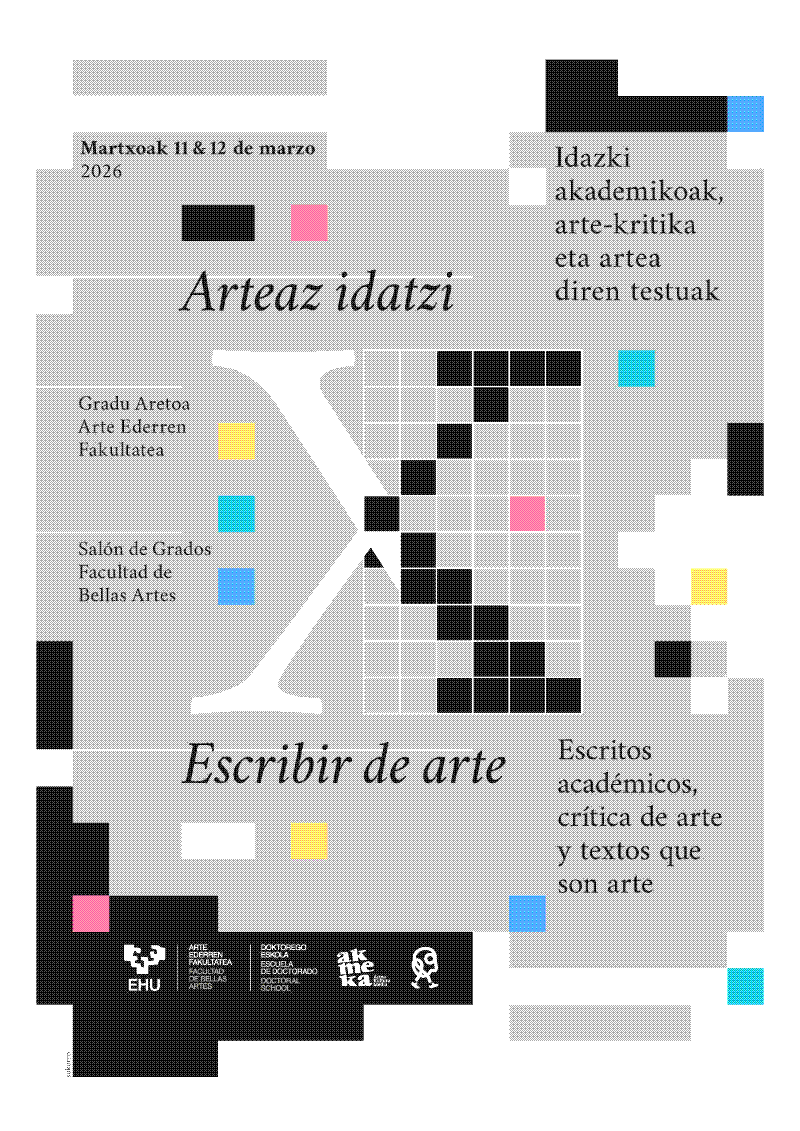
On March 11, 2026, Ezequiel Soriano and Mariem Iman will lead the workshop “Romancero Sintético: A Literary Writing Workshop with Small Language Models”, as part of the Escribir de Arte conference programme at the Faculty of Fine Arts of the University of the Basque Country (UPV/EHU) in Leioa.

The two-hour session will explore small, local, open, and sustainable alternatives to the hegemonic tools used for AI-generated text. Through different small, open-source language models, participants will experiment with building a machinic creole language, exploring the poetic potential of artificial intelligence through imprecision and noise.

Full programme:

https://www.ehu.eus/ehusfera/bbaa/2026/02/12/arteaz-idatzi-jardunaldiak-%C2%B7-jornadas-escribir-de-arte-agiri-kulturala/

Book presentation: "Medios inestables" at Libraría NUMAX (Santiago de Compostela)

Book presentation: "Medios inestables" at Libraría NUMAX (Santiago de Compostela)

Friday, March 6, at 7:00 pm, Libraría NUMAX (Santiago de Compostela) will host the presentation of “Medios inestables” (published by Bartlebooth), by Mexican curator and researcher Doreen A. Ríos, with the participation of Ezequiel Soriano.

The book brings together a series of essays exploring the condition of instability that characterizes contemporary technical objects and the artistic practices that confront them, through concepts such as memes, screenshots, glitches, virtual exhibition spaces, and digital materialities.

Free admission, subject to capacity.

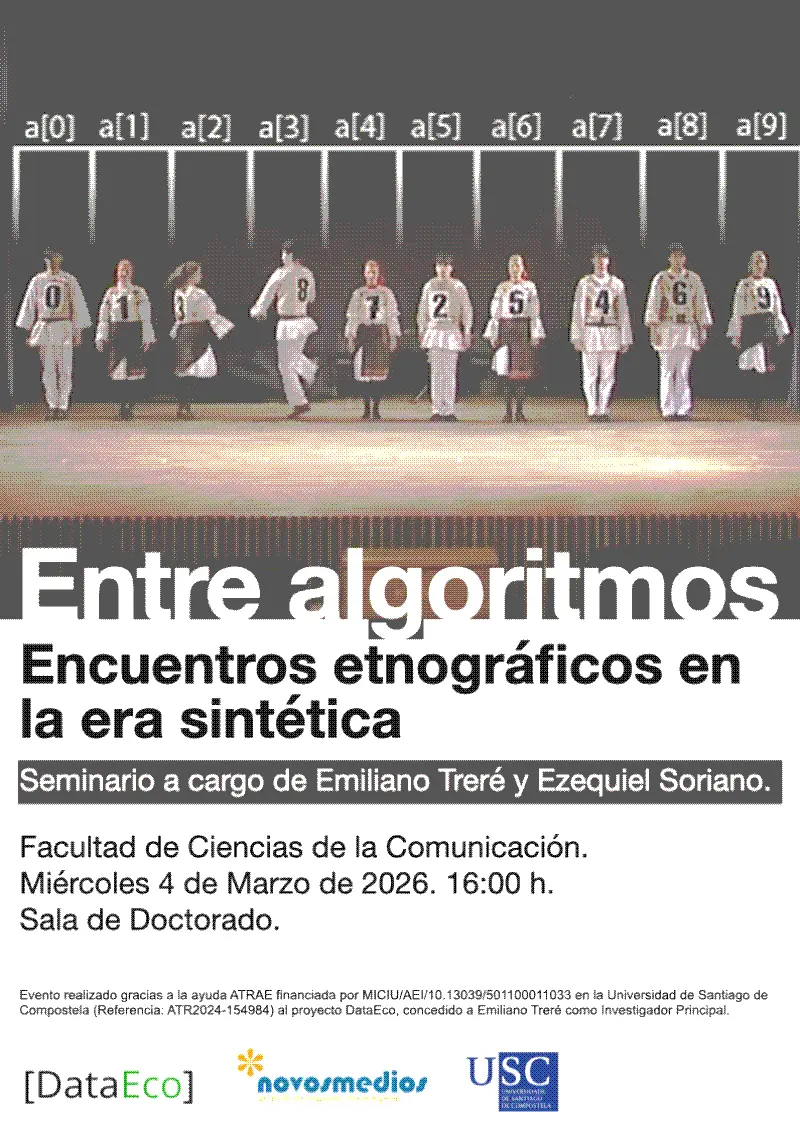
Seminar “Between Algorithms: Ethnographic Encounters in the Synthetic Era”

Seminar “Between Algorithms: Ethnographic Encounters in the Synthetic Era”

Next Wednesday, March 4, 2026, at 4:00 pm, the DataECO project will host the seminar “Between Algorithms: Ethnographic Encounters in the Synthetic Era” at the Doctoral Room of the Faculty of Communication Sciences at the University of Santiago de Compostela (USC). The seminar will be led by Emiliano Treré and Ezequiel Soriano.

The event is conceived as a space for critical reflection on social research of, with, and through algorithms. The general lines of the DataECO project will be presented, alongside an exploration of techniques and approaches for studying social life in relation to generative artificial intelligence.

The seminar is open to faculty, researchers, students, professionals, and the general public. No prior registration is required.

Talk “From Prompt to Mud”: AI, Art and Material Processes at La Capella (Barcelona)

Talk “From Prompt to Mud”: AI, Art and Material Processes at La Capella (Barcelona)

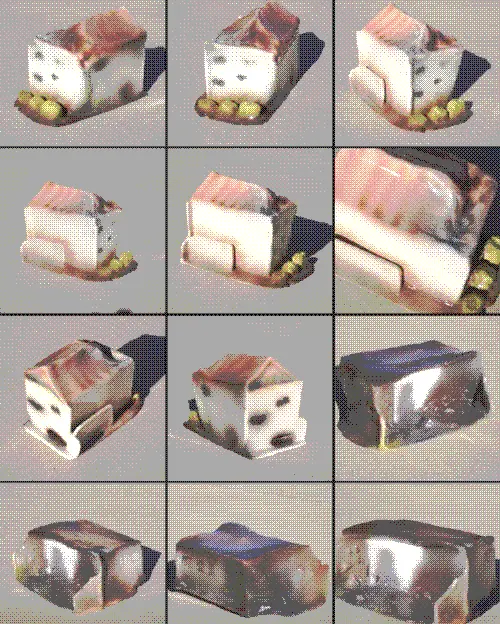
Next Thursday, January 8, at 6:30 pm, La Capella (Barcelona) will host the conversation “From Prompt to Mud: A Conversation on AI, Art and Material Processes”, as part of the 2024/25 Guasch Coranty Grants for Artistic Creation.

The event will feature artist Meritxell Cañas (@mericanyas), one of the grant recipients, and anthropologist Ezequiel Soriano.

The conversation will explore questions such as: How does a machine imagine what we call “home”? And what happens when these digital images find a way to exist in the physical world?

Free admission.

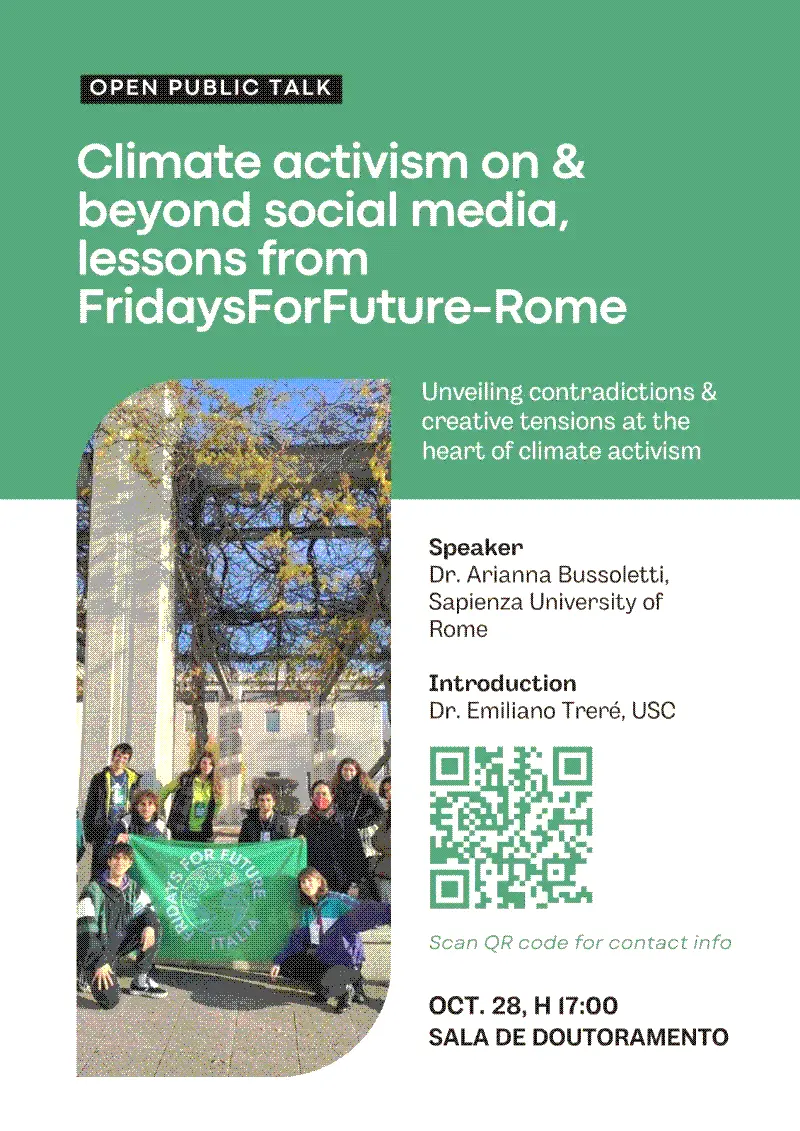
Open Public Talk: Climate activism on & beyond social media, lessons from FridaysForFuture-Rome

Open Public Talk: Climate activism on & beyond social media, lessons from FridaysForFuture-Rome

On October 28 at 17:00, in the Sala de Doutoramento of the University of Santiago de Compostela, we will host the open talk "Climate Activism on & Beyond Social Media: Lessons from FridaysForFuture-Rome", unveiling contradictions and creative tensions at the heart of climate activism.

Speaker: Dr. Arianna Bussoletti (Sapienza University of Rome) Introduction: Dr. Emiliano Treré (USC)

Open to all.